

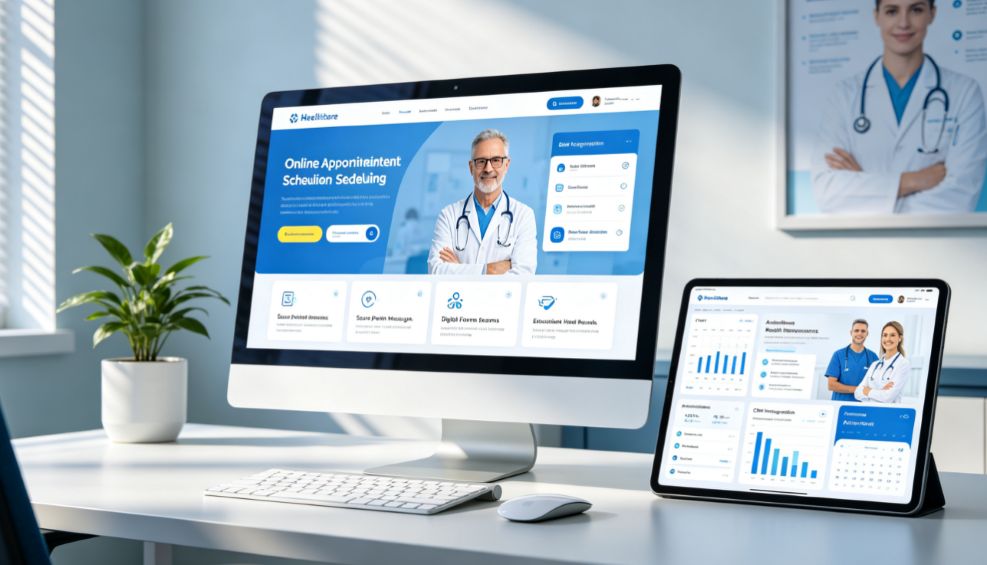
Digital communication has become an expected part of healthcare delivery. Research from the Pew Research Center shows that many adults rely on online resources when looking for health information, while healthcare providers continue expanding digital services to improve access and convenience. As patient expectations change, healthcare websites have taken on a much broader role than simply listing office hours or phone numbers.
Many healthcare organizations now use their websites as the primary gateway for communication before, during, and after appointments. Services like the MDConsultingNY growth playbook illustrate how coordinated digital strategies can support stronger patient engagement by connecting websites with scheduling systems, customer relationship management software, and communication tools. Rather than serving as online brochures, websites increasingly function as interactive platforms that support ongoing relationships between practices and patients.
Booking an appointment online is no longer viewed as a luxury. Patients increasingly expect to schedule healthcare visits whenever it is convenient, without waiting for office hours or making phone calls.
Many modern scheduling systems allow patients to:
Reports from the American Medical Association note that digital scheduling tools can improve administrative efficiency while making access easier for patients. Staff members spend less time handling routine scheduling calls and can focus on more complex patient needs.
Communication rarely ends once an appointment is over. Patients often have follow-up questions, need clarification about treatment instructions, or require access to test results.
Secure messaging systems integrated into healthcare websites allow patients to communicate through protected channels instead of relying on standard email. These systems commonly support:
The Office of the National Coordinator for Health Information Technology (ONC) highlights secure patient portals as an important component of improving patient access to electronic health information while maintaining privacy and security standards.
Healthcare websites increasingly serve as educational libraries that help patients understand conditions, treatments, and preventive care before speaking with a healthcare professional.
Instead of searching across numerous websites, visitors often prefer finding reliable information directly from their healthcare provider. Educational content may include:
Research published by the National Institutes of Health indicates that accessible, high-quality health information supports better patient understanding and encourages more informed participation during clinical consultations. Clear educational materials can also reduce confusion surrounding common procedures and ongoing care.
Modern healthcare websites increasingly connect with customer relationship management, or CRM, platforms that organize patient communications throughout the care journey.
Instead of treating every visitor the same way, integrated systems can help practices provide communication that reflects a patient’s interactions and preferences. Depending on the organization’s policies and applicable privacy requirements, CRM software may assist with:
Studies from Healthcare Information and Management Systems Society (HIMSS) emphasize that integrated digital communication can improve coordination across administrative and clinical teams while creating a more consistent patient experience.
Paper forms are gradually being replaced by digital alternatives that patients can complete before arriving for an appointment. This shift reduces repetitive paperwork and helps practices prepare for each visit more efficiently.
Many healthcare websites now allow patients to complete:
Research from the Agency for Healthcare Research and Quality (AHRQ) suggests that well-designed digital workflows can reduce administrative delays and improve the accuracy of patient information. Completing forms in advance also gives patients more time to review questions carefully instead of rushing through paperwork in a waiting room.
Healthcare websites generate valuable data that can help organizations understand how patients interact with digital services. Analytics platforms provide insights that support ongoing improvements without relying on assumptions.
Common website metrics include:
Google Analytics and Google Search Central provide guidance on interpreting website performance data to improve usability and accessibility. Beyond measuring engagement, analytics can also help organizations recognize unusual traffic patterns and potential security concerns. Learning how website analytics can identify suspicious activity offers additional insight into protecting website performance while maintaining a reliable experience for patients. When combined with patient feedback, these insights help organizations identify areas where users may encounter obstacles and refine the overall digital experience.
Analytics can also reveal which educational topics generate the greatest interest, allowing healthcare providers to expand resources that answer common patient questions while simplifying pages that may be difficult to navigate.
The most effective healthcare websites rarely operate as standalone systems. Instead, they serve as central hubs that connect scheduling software, CRM platforms, reputation management tools, secure messaging systems, analytics, and marketing technologies into a coordinated digital ecosystem.
When these technologies work together, practices can provide a more consistent experience from a patient’s first website visit through appointment scheduling, follow-up communication, and ongoing engagement. This integrated approach reflects many of the broader digital strategy principles discussed in the MDConsultingNY growth playbook, where multiple software solutions support a unified patient communication process rather than functioning independently.
Artificial intelligence is expected to expand these capabilities even further. AI-powered virtual assistants can answer common questions, help patients locate relevant information, assist with appointment requests, and direct visitors to appropriate services. Conversational interfaces continue to improve, although healthcare organizations must ensure that these technologies complement professional care while protecting patient privacy.
Experts from the World Health Organization and the Organisation for Economic Co-operation and Development (OECD) note that digital health technologies have significant potential to improve access, efficiency, and patient-centered care when implemented responsibly. Successful adoption depends on strong governance, data security, and maintaining trust between healthcare providers and patients.
Healthcare websites have grown into comprehensive communication ecosystems that support patients throughout their healthcare journey. Online scheduling, secure messaging, educational content, CRM integration, digital forms, and analytics each contribute to a more convenient and connected experience while helping practices streamline everyday operations.
Future innovations will likely continue strengthening these digital connections. Artificial intelligence, improved interoperability, and increasingly personalized communication tools are expected to make healthcare websites even more responsive to patient needs. As technology advances, organizations that focus on accessibility, privacy, and seamless integration will be well positioned to deliver meaningful digital experiences that benefit both patients and healthcare teams.